
How to Paint a Piano with 20 Kids
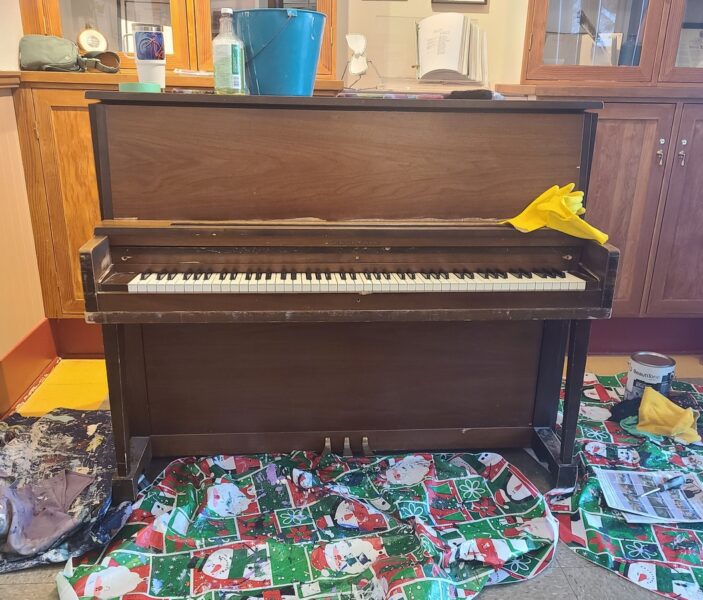
This November I was asked to paint a piano (an actual piano, not a painting of a piano) with the students enrolled in the Fine Arts eCademy (Fae) at NIDES (North Island Distance Education School). It was for their Spark Week which happens three times a year. At this time, kids select from different activities that may be in line with their own “sparks” or individual interests, such as ceramics, music or outdoor education. These are often facilitated by artists or other members in the community.
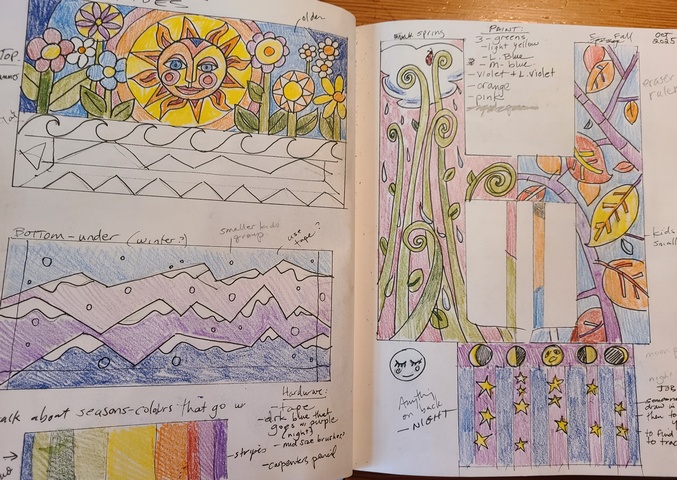
The loose theme I was given for creating the piano design was “seasons”. I started by giving the brown, slightly beat up piano, two coats of white primer. I also planned out the design for the four sides in my sketchbook, which became our reference for painting. The goal was to make the design not too difficult but detailed enough to keep twenty kids (divided into two groups, ages five to thirteen) busy for three days.
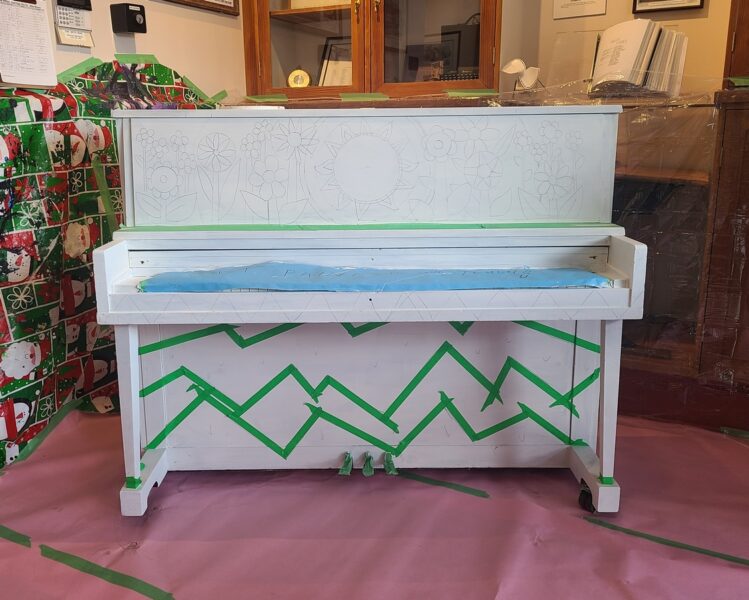
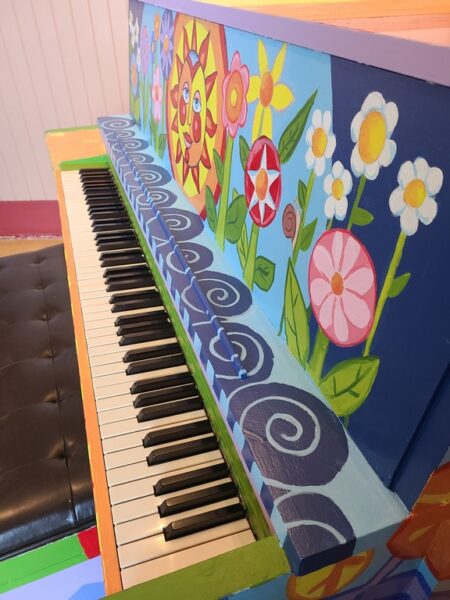
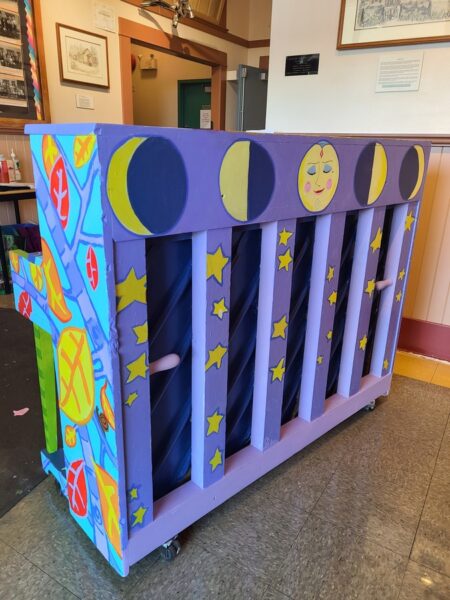
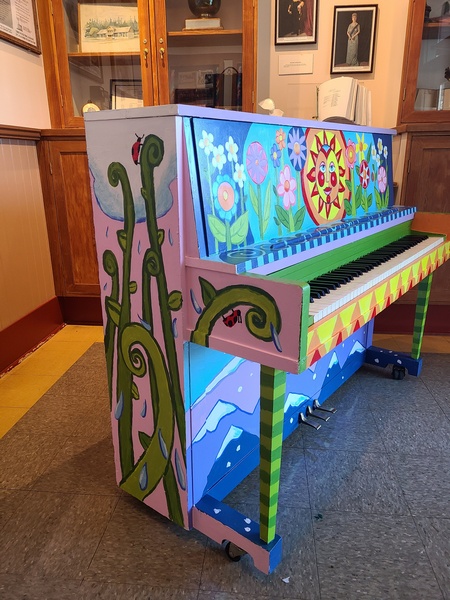
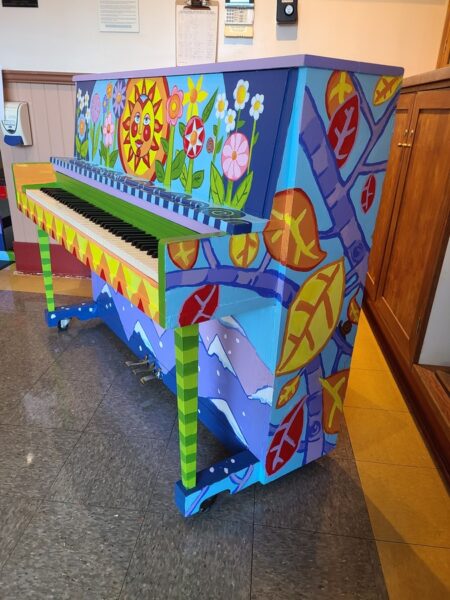
There was a simple mountain “winter” scene of triangular shapes for the younger students to do on the bottom section. A more complicated “summer” section on the top was pencilled out for the older ones. The sides were “spring” and “fall” and the back was “night” with stars and moon phases.
Before the painting started, I sketched the main design onto the primed piano, and taped off a few areas for the smaller kids to fill in. I also pre-mixed a bunch of paint colours in smaller containers. I did as much prep as I could so that I could focus on the actual painting part with the kids.

At the beginning of every painting session, the students and I did a tour of the piano (and bench) together, looking at the progress so far and deciding together what needed to be done next. Even though the kids didn’t decide the overall design, they made decisions about which colours to use for flowers, piano legs and borders. A couple of the older ones drew out the faces on the sun and moon. They also learned how to hold a paint brush properly and apply paint for this project (not thick like cake icing) and why I chose certain colour combinations. The students were taught how to create the randomness and perspective found in nature (falling snow on mountains, flowers, leaves or rain drops) or how to tape areas to create straight lines. They also saw how an idea (designed in the same type of sketchbook they all are given at school) could lead to a finished product.

It was also important that we had a paint station and a sink nearby to clean brushes. Every time someone finished with a colour, they made sure the paint container was closed, brushes were rinsed out and set on a “dirty brush pile”, to be properly cleaned later at the sink (which we took turns doing). Having an organized work area and a system to follow, with lots of water containers and rags was essential.
In the end, I thought this project was very complicated. Lots of different kids, different ages, different scenes on the piano and different colours. Many different parts having to work together. This was accompanied by the banging of construction workers outside who were removing stucco with sledgehammers and a super moon accompanied by back-to-back storms. We were painting in the foyer, so we watched people come and go, braving the dramatic weather. This caption “do not try this at home” comes to mind.
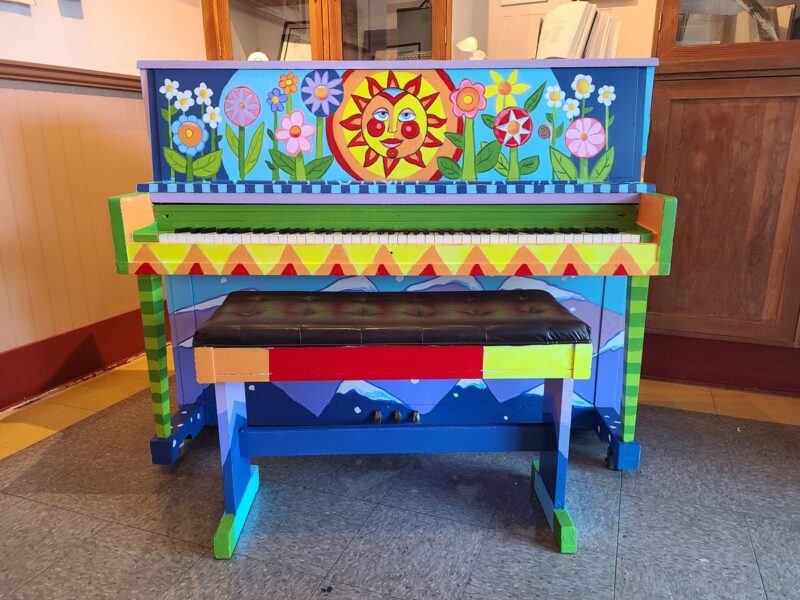
However, as is usual with pulling off a challenging feat, there is a large sense of accomplishment at the end. It was fun to watch what looked like an old, neglected piano, come to life and become a new feature of the school. The Strathcona Symphony orchestra, who practices there, even took a picture of the piano to put on their Facebook banner. The kids should be proud because without their respect for the project, interest in art and consideration of each other, the piano would not have had such a beautiful presence in the end.
Sounds like we will be painting another piano in February, stay tuned….